Categories
Blog

Concluding Thoughts on Gender Equity in Uncertain Times: Challenges and Opportunities

by Ying Liu

Image of tiles that spell out step by step in-between two small rocks.

This Fall 2025 blog series brought together scholars and practitioners to explore what gender equity looks like in a period marked by political polarization and policy turbulence across a wide range of topics. Gender equity has gained increasing attention over the last several decades in public administration (Fantoni et al. 2025; Bishu and Heckler 2021; Shields and Elias 2022; Bearfield 2009; D’Agostino and Levine 2010), propelled by landmark policies and social movements that have brought gender inequalities into the public spotlight. For example, the passage of Title IX in 1972 laid an early legal foundation by prohibiting sex discrimination in education. The #MeToo movement in 2017 brought renewed attention to gender discrimination and workplace equality. More recently, the legalization of same-sex marriage and subsequent policy debates have made LGBTQ+ rights an increasingly visible and contested arena of gender equity. The overturning of Roe v. Wade further marked a dramatic shift in women’s reproductive rights. As federal policymaking has become increasingly volatile in recent years, the pursuit of gender equity has faced substantial challenges, particularly since the onset of the Trump administration.

Several authors assess federal policies and their structural implications for gender equity. Kathryn Hickey examines 140 laws enacted over the past decade that affect the LGBTQ+ community and demonstrates how these policies “other” and discriminate against transgender individuals. Marilyn Rubin and John Bartle focus on the tax system and reveal how federal funding cuts push state and local governments toward regressive fiscal policies that disproportionately harm women. Kayla Schwoerer explains how the Digital Equity Act has played a crucial role in addressing gender inequality in the digital realm. Rolling back efforts such as broadband expansion funding and digital literacy initiatives would reverse recent progress and deepen gendered inequities. Beth Rauhaus, Deborah Sibila, and Cameron Robin observe that “current abortion bans risk creating a new category of ‘criminals’,” echoing earlier periods when women’s bodies were subject to state control and reproductive healthcare was treated as part of the criminal justice system. In the agricultural sector, Aritree Samanta and Cevacien Adee document longstanding gender inequalities, including persistent representation-information gaps in USDA programs. They suggest that expanding gender representation in leadership roles is one way to improve outcomes for women farmers. Intersectionality also emerges as a central theme in the analysis of federal policies. Ming Xie illustrates this by showing how policy shifts such as the end of DACA and the reinstatement of the “public charge” rule disproportionately affect immigrant women.

While the current polarized climate presents significant challenges to gender equity, several scholars identify opportunities to advance progress. Heather Getha-Taylor draws on the example of civil rights leader Septima Poinsette Clark to show how strategic local action can help “overcome the shadows of adversity” created at the federal level, noting that “adversity can be a motivational force” for advancing gender equity. Dora Mendez reflects on her work with local government leaders and emphasizes the importance of adaptive and resilient leadership during crises, arguing that leaders should “operate with both pragmatic realism and unwavering commitment to equity.” Karen Sweeting examines the growing crisis of gender and identity erasure and argues that inequities will persist without recognizing marginalized identities. In a polarized climate where resisting erasure invites backlash, she suggests that intentional spaces for authenticity and visibility are essential. The series also includes reflections on the implications of this turbulent environment for public administration education. Michelle Evans, Nancy Lewis, and José Luis Irizarry argue that educators should adopt a “street-level pedagogy” to rethink how and what they teach in a polarized climate.

In the current state of gender equity, as we face “two steps back,”  the future calls for continued dialogue and sustained efforts by scholars, practitioners, educators, and community leaders. Our collective commitment will determine if and how we take the next “three steps forward” toward gender equity. 

◂Return to blog homepage


About the author:

Ying Liu is a PhD candidate at the School of Public Affairs and Administration at Rutgers University–Newark. Her research interests include public and nonprofit management, social equity, local governance, digital government, and accountability.  Committed to mainstreaming gender issues in public and nonprofit administration, she is currently exploring topics such as women’s representation, gender-responsive budgeting, gender and technology, and women’s nonprofit organizations. Her work has been published in journals including Review of Public Personnel Administration, Policy Studies Journal, and The China Quarterly. She earned her Master of Public Administration from Wuhan University and Bachelor of Public Management from Huazhong University of Science and Technology.

Categories
Blog

Adapting Curriculum for a Changing World

by Michelle D. Evans, Nancy Lewis, & José Luis Irizarry

Image of a globe.

The IGEPS Blog Series examines shifts in policymaking across our decentralized republic, with emphasis on the intersection of state/local governments and the nonprofit sectors where most policy and implementation clashes are most visible and impactful.

In this blog, we focus on the implications of preparing future public and nonprofit leaders to navigate current and future policy shifts in an increasingly polarized environment. The concept we apply is that of public service faculty as street-level bureaucrats who are preparing future frontline street level bureaucrats (Lipsky, 1980) through the use of “street-level pedagogy” that utilizes critical reflection in course design and materials, encourages the incorporation of a broad spectrum of perspectives and lived experience, and attention to communication practices to encourage engagement (Irizarry et al., 2024). 

Street-level Educators Training Current and Future Street-level Administrators

A critical role of faculty in public administration and nonprofit programs is to prepare students to work in public service. Men make up approximately 53% of the general workforce (U.S. Bureau of Labor Statistics, 2025). Women make up 45.5% of the federal public service workforce (U.S. Equal Employment Opportunity Commission, 2021) and nearly 67% of the nonprofit workforce (Miller, 2024). In terms of education, in recent decades women represent the majority (53%) of college educated workers in the general workforce (Fry, 2025). Within public service higher education, women make up 59% of accredited public service masters students (Qiu, 2024), while nearly three-quarters of workers in the nonprofit sector have an associate degree or higher (Miller, 2024). 

With these statistics in mind, it is important to consider the challenges of educators on the frontline of professional development, training, and education. Public administration and nonprofit educators, through street-level pedagogy, attempt to prepare current and future public service leaders (Irizarry et al., 2024). Educators must address the specialized disciplinary knowledge and the holistic development of each student as they prepare to be productive leaders within the field. Pedagogical choices are informed by the professional norms and values of public service, where the daily reality can be emotionally intense when interacting with people in need and in times of crisis. It is imperative that public service education programs continue to emphasize social skills to prepare for working with the public as this is core to the public and nonprofit praxis which are front- and human-facing activities. 

Recent shifts in policies impacting the public workforce, in higher education in particular, require that educators reflect on and evaluate their ongoing pedagogical choices and how they align with the current (and anticipated) workforce realities. At the same time, self-reflection of street-level pedagogy should consider how changes in workforce realities might also shift public service norms and values within academic programs and praxis. 

Scanning the Horizon: Aligning and Adapting 

Gendered shifts in the workforce are not new. Historically, we have seen shifts in the workforce (e.g. industrialization, urbanization, WWII, Civil Rights Era, COVID-19) connected to gender and gendered social norms (Nobel Prize Committee, 2023; Schaeffer, 2024; Yellen, 2020). Similarly, we have seen shifts in student demographics, perhaps corresponding to the shifting workforce needs and demands. We’ve seen across the board downsizing efforts of the public sector workforce with similar trickle-down impacts on employment at the state and local levels, nonprofit sector, and related actors and industries due to uncertainty associated with recent federal policy shifts.  

These are not the only dramatic shifts we have seen nor anticipate. At this critical fork in the pedagogical road, this is an opportune time for reflexive examination of our public service values and praxis that must continue to be addressed within our curricula and educational programs moving forward. Therefore, we provide the following selection of critical and emerging issues that will need to be addressed in the gender equity policy landscape: 

  • Enrollment/recruitment of faculty and students—how do these need to be adjusted in the light of new rules and regulations to curb DEI initiatives and goals. This includes how to respond to new policy shifts on H1B visas and work authorizations. 
  • Educational reimagination – the “how” to teach:
    • learning modalities (online, hybrid, or face-to-face)
    • how/whether to accommodate student preferences in modalities, and increasing school/work/life-balance issues. 
    • incorporating social and interpersonal skill development within increasingly online and remote environments
  • Educational reimagination – the “what” to teach:
    • Academic freedom in course design/material vs increasing oversight by accrediting bodies, consumer watch groups, and legislative/executive policies 
  • Use of generative artificial intelligence (AI) tools:
    • how do we balance the misuse and potential over reliance of AI in ways that limit student creativity, critical thinking, and learning of the specialized disciplinary knowledge and skills. 
    • how do we prepare students to be part of a workforce whose reliance on AI tools may fundamentally alter how we think of public engagement.
    • how do we address the built-in gender and demographic equity issues arising from AI algorithms and programming 

It is essential that our curriculum reflects disciplinary core values, balancing the needs of efficiency, effectiveness, economy and equity. At the same time, we must also ensure that our curriculum is designed to effectively, and equitably, serve the needs of all students and future public sector leaders. In doing so, we ultimately are able to make positive change while serving the needs of the public, particularly those vulnerable populations most often in need of public services. How we address and/or resolve these debates are likely to transform the public service education landscape and by extension the policy and service delivery in the near and long-term future.

◂Return to blog homepage


About the author:

Michelle D. Evans is an associate professor at the University of Tennessee at Chattanooga.  Her research focuses on social equity, diversity/intersectionality and pedagogy. She is Co-Editor-in-Chief of the Journal of Social Equity and Public Administration and has served on the board of ASPA Section for Women in Public Administration. She spent more than 20 years as a nonprofit practitioner, working primarily with Special Olympics. 

About the author:

Nancy Lewis is a dedicated nonprofit professional and enjoys working with mission-driven organizations. She strives to strengthen community engagement and specializes in work with vulnerable populations. Nancy is currently completing her Master of Public Administration at the University of Tennessee at Chattanooga, where her studies focus on nonprofit management, governance, and policy.

About the author:

José Luis Irizarry, Ph.D (he/him) is an Assistant Professor of Public Administration & Director of the Graduate Nonprofit Management Certificate at North Carolina Central University. His research focuses on public and nonprofit values, pedagogy, social equity, mindfulness, and civic engagement. He is the Editor of Public Administration, Civic Engagement, and Spanish-Speaking Communities (October 2025), as well as lead Guest Co-Editor of the forthcoming special issue on foster care and adoption for the Journal of Nonprofit Education and Leadership

Categories
Blog

Unsettled Inside: Gendered Realities in a Divided Society

by Karen D. Sweeting

Image of a group of wooden block people serrated from another wooden block person.

The debilitating nature of our current reality has sparked immense anxiety on critical issues from women’s rights and immigrant rights to LGBTQ rights and identity. It seems that difference itself is now questioned as to whether it’s legitimate or even legal. “Uncertain times” is how our current reality is being framed – yet, does this “uncertainty” truly capture the depth of identity erasure that so many are struggling to make sense of in this “new” climate? 

When the federal government collapses gender into biological sex, or when state legislatures write gender identity out of law, they are not simply “clarifying” terminology. They are making a claim about reality: what kinds of identities can be recognized, and whose lives are legitimate. The current administration’s executive orders, alongside laws we see emerging in states such as Texas and Florida, that collapse gender into biological sex, are not administrative clarifications; they are acts of power. As Arendt, Foucault, and Jaspers remind us—acts by the state are never neutral. They function not only to shape what we can say, but also try to dictate who we should be, how we identify, and how we present ourselves. Laws that seek to fix gender as immutable not only seek to regulate bathrooms, sports, or documents; they foreclose alternative ways of being, constraining the possibilities through which we make sense of and engage the world around us.

We all see the world from different vantage points. That has always been true. But in the current climate—where identity, belonging, and sense of self are increasingly politicized—those differences are not only amplified, they are often weaponized. Structural inequities affecting women remain acute. From wage gap to reproductive rights, from parental leave to the politics of masculinity, gender debates today reveal not a single crisis but a web of interconnected tensions around gender politics. Academic research continues to show that our reality skews toward masculine norms. The invisible labor of emotional work (diversity-related service, mentorship, and student support) continues to disproportionately fall on women. This imbalance compounds workload inequities, since “invisible” labor is often not recognized as legitimate work. It also imposes norms on women that may slow promotion, restrict pathways to career advancement, and systematically limit access to leadership opportunities. Masculine norms, ingrained in our institutions, continue to reinforce systemic barriers that reproduce exclusion, even in spaces that claim a commitment to equity and inclusion. At their core, these tensions challenge us to confront how we distribute care and resources across a society.

Our realities are gendered because we are gendered. A profound truth has been illuminated in recent months: gender, race, and identity are not side notes in policy analysis and administrative action—they are the lens through which the consequences of governance are most acutely felt. A society that redistributes resources without recognizing marginalized identities will reproduce inequities and exclusion. 
Where does this leave us? Gains for trans people are not losses for cis people; equity for women is not a threat to men. What is threatened are outdated systems of power that thrive on binary thinking, rigid roles, and exclusion. Reflecting on this leaves me grappling with the question: How do we continue to create space to show up authentically in a polarized climate that is punitive for those who resist or push back against identity erasure? To do so requires both bravery and vulnerability, as the fear and cost of retaliation is real, and safe spaces for academic inquiry and critical thought are increasingly under threat. Yet forums such as this remain vital for sustaining these conversations. While many universities are complying with mandates to “clean” their sites, faculty profiles, and curb academic freedom of such issues, others persist in their advocacy, recognizing that the gaslighting at play is a slight of hand designed to make us question the legitimacy, and even the legality of advocating for equity and inclusion, and fostering spaces for critical thought and dialogue.

◂Return to blog homepage


About the author:

Karen D Sweeting iis an associate professor at the University of Rhode Island. Her research focuses on enhancing public service delivery for vulnerable, minoritized, and marginalized communities, with a strong emphasis on fostering a humanistic and justice-oriented approach to public service. With over two decades of professional experience in public service prior to transitioning to academia, Dr. Sweeting brings a deep, practice-informed perspective to her scholarship focusing on issues of equity, inclusion, identity, and ethics. 

Categories
Blog

Recent Federal Policy Changes: The Gendered Impacts on State and Local Government Taxes

by Marilyn Marks Rubin and John R. Bartle

Image of a stack of money.

In early 2024, the United Nations Development Programme (UNDP) held its first “Global Dialogue on Public Finance and Taxes for Gender Equality,” a conference to discuss how biases in government fiscal policies, especially taxes, impact gender equality and the empowerment of women.

Tax biases can be explicit, with specific regulations or provisions that treat men and women differently, or implicit, with provisions in the tax code having different gender impacts due to underlying and systemic social norms and economic roles. Looking at the U.S., nowhere in the federal tax code nor in state and local tax codes does it explicitly state that women and men should be treated differently. However, while the tax law language may be “gender blind,” taxes can have differential impacts on men and women due to their different social and economic characteristics, such as providing non-paid labor. For example, two-thirds of non-paid care in the U.S. is provided by women. When calculating their personal income tax liability, caregivers may not be able to deduct all expenses related to this care, thus increasing the amount of their income that is subject to the tax.

Implicit tax biases can occur across all forms of taxation, including taxes on income (e.g., personal income taxes), consumption (e.g., sales taxes), and wealth (e.g., property taxes). The ubiquity of biases in taxation brings us to the current topic on how state and local actors are navigating the gendered impacts of recent federal policy changes. By reducing federal funding and offloading federal obligations for providing health care and other services to state and local governments, the question arises as to how subnational governments are going to pay for their increased responsibilities.  

All but one state government (Vermont) and just about all local governments have a constitutional/charter or statutory balanced budget requirement, meaning that they cannot spend more money than what they take in through their own source revenues including user fees and taxes.  Moreover, most borrowing is restricted to capital expenditures for infrastructure projects such as roads and bridges and not for operating expenses such as those related to health care and social services. So, subnational governments are left with two options: not providing the services or raising taxes and/or user charges to pay for them.  The first option, not providing the services, would negatively impact the lives of many citizens (who are also voters) and seems to be (or should be) out of the question. So that leaves increasing taxes and/or user charges as the only option. We focus our remarks on taxes.

Tax systems of state and local governments are quite different from that of the federal government. While some taxes in the federal tax system are regressive, such as payroll taxes for Social Security and Medicare, even with the multitude of loopholes available to higher income taxpayers, the total federal tax system is somewhat progressive. This means that the burden is higher on higher-income earners than on lower-income earners. State and local tax systems are mostly regressive, meaning that they take a greater percentage of income from lower-income earners – predominantly women – than from higher-income earners. Women account for close to 70% of workers in the lowest-wage occupations that generally pay less than $10 per hour (National Women’s Law Center 2017).

Among the states, 27 impose progressive income taxes in which the tax rate increases as incomes rise; 14 impose flat rate taxes in which the same rate is applied to all incomes, thus taking a greater percentage of income from lower income workers (Tax Foundation 2025). In addition, almost 1/3 of tax revenues for the 50 states come from sales taxes (Tax Foundation 2025) that are regressive, disproportionately impacting lower-income households. In 2023, close to one-third of families in the U.S. with children living in poverty were headed by single women (National Women’s Law Center 2023).

Property taxes are the primary revenue source for local governments, accounting for close to half  of own-source tax collections in fiscal year 2022 (Tax Policy Center 2024). Property taxes are sometimes seen as being progressive due to the concentration of homeowners in higher income brackets. However, effective property tax rates are higher for lower-income people, a greater proportion of whom are women. 

In summary, state and local governments will either not fill the gap in services for their residents left by decreased federal funding, or will pay for the services by increasing taxes and/or user charges. These charges, like most state and local taxes, are regressive, taking a larger percentage of income from lower-income earners – primarily women – than from higher-income earners. The differential gender impact of recent federal policy changes needs to become part of the discussion of the impact of these changes on state and local government fiscal policies. 

Unfortunately, as a result of federal policy changes, the data that would underlie this discussion are becoming increasingly difficult to obtain. According to the Federation of American Scientists, many federal agencies are reducing data collection efforts due to “targeted, surgical removal of data sets, or elements of data sets, that are not aligned with the administration’s priorities.” This, too, has to become part of the discussion.

◂Return to blog homepage


About the author:

John R. Bartle is a Distinguished Professor of Public Administration and Dean Emeritus of the College of Public Affairs and Community Service at the University of Nebraska at Omaha. He is President of the American Society for Public Administration (ASPA). He was elected as a fellow of the National Academy of Public Administration in 2010 and currently serves as Treasurer. He received two major awards from ASPA sections: the Aaron Wildavsky Award for lifetime achievement in budgeting and financial management, and the Truitt-Felbinger Award for significant contributions to the field of transportation policy and administration. He has co-authored or edited four books: Innovative Infrastructure Finance: A Guide for State and Local Governments, Management Policies in Local Government Finance, Sustainable Development for Public Administration, and Evolving Theories of Public Budgeting. He has published over 70 articles and book chapters in both academic and practitioner outlets. He has worked with the Nebraska Legislature to provide policy advice for fifteen years. He worked in city and state government in Minnesota, and for state and national nonprofit research organizations on tax policy issues. His bachelor’s degree is from Swarthmore College, his MPA from the University of Texas, his Ph.D. from The Ohio State University and an honorary Doctorate of Humane Letters from the State University of New York. 

About the author:

Marilyn Marks Rubin is a Distinguished Research Fellow at the Rutgers-Newark School of Public Affairs and Administration and Professor Emerita at John Jay College of the City University of New York where she was Director of the MPA program for more than 25 years. Her primary areas of research are state and local public finance and gender budgeting. She has authored/edited several books and articles in a number of academic journals and is a Fellow in the National Academy of Public Administration (NAPA). Dr. Rubin holds a PhD from the Robert F. Wagner School of Public Service of New York University.

Categories
Blog

Land, Power, and Representation: Closing the Gender Gap in Agriculture

by Dr. Aritree Samanta and Cevacien Adee

Image of plants in the dirt.

Agriculture in the United States has long been deeply inequitable, shaped by structural bias and resulting in consequences for the many who sustain the nation’s economy via agriculture and food supply at home and abroad. According to the latest estimates, 43% of U.S. farmland is farmed or co-farmed by women, but they have continued facing gender-related barriers in decision-making roles on their farms and remain underrepresented in USDA program design and access (American Farmland Trust, 2025). The quest for gender equity in farming and agriculture has seen some positive strides in recent decades – driven largely by grassroots organizing by farming groups, empirical research on equity gaps, civil rights lawsuits, and policy advocacy by farming non-profits. For example, as recently as in 2017, the Census of Agriculture began allowing the listing of more than one producer per farm, making women’s decision-making roles more visible. Earlier policy changes included setting participation targets for farm ownership loans in 1987 and creating the “Socially  Disadvantaged Farmer or Rancher” category, which included women, in the 1990 Farm Bill, with set-asides for beginning and disadvantaged producers. More recently, $2 billion was paid to  43,000 farmers discriminated against in USDA lending prior to 2021. While these measures  advanced distributive and restorative justice, major gaps remain: women farmers, for example,  still face an information-representation gap in USDA programs (Samanta et al. 2021). The  information-representation gap in agriculture is the mismatch where USDA programs, outreach,  and networks are designed for male farmers, leaving women farmers and landowners  underrepresented, underserved, and excluded from access to information, resources, and  decision-making. 

Federal policy shifts don’t automatically translate into equitable outcomes for women farmers.  Cultural recognition of women’s central role in farming and the actions of grassroots governance entities, such as the county-level conservation districts, is critical. Our study of randomly  sampled 89 districts shows that while farmers are 64.15% men and 35.85% women (2022  Census), in 37 out of these 89 districts, 41.57% of district boards are all-male. Since these boards set priorities for local and federal conservation funding, equitable representation on these boards matters. Historic land ownership restrictions—largely limited to white men—still shape who can serve, with many states requiring candidates to be landowners, gather signatures from other landowners, or even be appointed through elite or exclusionary organizations. These board candidacy rules kept power and leadership in the hands of those tied to historic land ownership. 

Some states are designing measures for increasing representation on boards, such as appointing  non-voting additional associate board members to carry out district tasks. In California, two  years of service as an associate member makes non-landowners eligible for full board candidacy,  offering an alternative means of gaining influence. Still, most states set clear term lengths but allow unlimited reappointments (no term limits), with some members serving for decades and blocking opportunities for new landowners, women, and other marginalized farmers. As a result,  boards remain overwhelmingly white, male, and older while district staff who carry out the conservation work are typically younger, more diverse, and more often women. Pathways to increase representation—especially of women farmers—such as allowing districts to appoint associate board members and setting term limits, need to be replicated and adopted nationwide so that boards better serve the women who farm 43% of U.S. farmland, along with other marginalized groups. 

Ultimately, gender equity in farming will be shaped by the interplay of changes at both federal and local levels. Shifts at one level—whether advancing or opposing equity—cannot alone achieve gender equity in agricultural governance. This is a hopeful frame to consider, one that aligns with historical patterns of American Federalism, that even in times of uncertainty, where there is a reversal in equity-centered policies, rescinding of programs for socially disadvantaged farmers, and a general move away from equity and justice focus culturally, sub-national governments can serve as institutional counterweights in advancing equity. This is our motivation for calling attention to the conservation districts. 

◂Return to blog homepage


About the author:

Aritree Samanta, PhD is an Associate Professor in the School of the Environment at San  Francisco State University. In Spring 2025, she was a visiting professor at the Laboratory for  Interdisciplinary Evaluation of Public Policies (LIEPP) at Sciences Po, Paris, France. Previously,  she held the position of Postdoctoral Research Associate at the Department of Forestry and  Natural Resources at Purdue University. She holds a Ph.D. in Urban and Public Affairs from  Cleveland State University. Her research is in the areas of collaborative natural resource  governance, climate change adaptation, and equity and justice issues in climate change policy  and natural resource governance. Her research can be found in Administrative Theory & PraxisPublic Policy and Administration, Perspectives on Public Management and Governance, Society  & Natural Resources, Journal of Environmental Planning and Management, among others.

About the author:

Cevacien Adee BA, is a Master’s of Science Candidate in Geographic Information Science at  San Francisco State University. He holds a Bachelor of Arts degree in Applied Linguistics from the University of California, Santa Cruz, and an Associate of Science degree in Geographic  Information Systems from Diablo Valley College. Cevacien is a 2025-26 Climate Action Fellow, for which he is researching the spatial relationships between prescribed burning, fire risk, and social inequality in California. Cevacien’s research interests include environmental justice, fire resilience, California native plant ecology, and habitat stewardship.

Categories
Blog

Overcoming the Shadows of Adversity

by Heather Getha-Taylor

Image of a shadow on a wall.

The push for equal opportunity and nondiscrimination in the United States was driven by the goal of ensuring that women and minorities could access education and employment and thus participate more fully in the economy and democracy. By opening the doors of opportunity, the contributions of women and minorities would benefit individuals, families, and the broader community. These priorities were woven into federal laws and policies as tangible representations of the American dream, that is, a place where everyone has the chance to succeed. Yet, in 2025, these values are under threat at the federal level, and their erosion stands to unravel decades of progress for the marginalized. 

The march toward improved equity found traction with President Johnson’s Great Society initiatives of the 1960s. As a result of that administration’s historic nondiscrimination legislation and affirmative action programs, the public sector became an employer of choice for women and minorities. However, a 2025 National Women’s Law Center report indicated that recent federal government job cuts disproportionately affected women and people of color, especially in agencies where they are well represented (Housing and Urban Development, Health and Human Services, and Education, for example). 

Similarly, President Trump’s Executive Order 14173 rescinded Executive Order 11246, which established race- and sex-based affirmative action programs for federal contractors. These programs were designed to ensure that the principles of equal opportunity and nondiscrimination extended to agents of the state who received public funds. Ideally, affirmative action programs should be retired once they reach their intended goals. However, a 2023 report by the Center for Investigative Reporting found that the goal of a representative contractor workforce was more rhetoric than reality: most of the leadership ranks of the nation’s largest contractors were far from equitable. 

These examples signal a departure from the pursuit of representative bureaucracy at the federal level. They cast a shadow on the prospects of women and minorities in the public sector today. And they echo to a time when marginalization was widely accepted. However, this is not the first time that adversity clouded the goal of equality. As those who embrace the values of diversity and inclusion question what to do in this moment, an important lesson comes from the life of Septima Poinsette Clark. 

Born in 1898 in Charleston, South Carolina, Clark experienced a host of inequities, including racial discrimination, gender bias, and socioeconomic divides. But she believed in the power of individuals and the importance of local action to achieve social change. In 1954, Clark was working at Highlander Folk School when she envisioned the concept of “citizenship schools” for those who had been denied an education and thus denied the opportunity to vote due to the barrier of literacy tests. She knew that teaching people to read would equip and empower them to have a voice in their democracy. Only then could the scales of justice begin to tilt toward greater equity. 

Clark’s vision of change began in Tennessee with one class of fourteen students and a budget of $100. With time, her concept diffused across the South, reaching thousands through literacy classes and citizenship workshops. One of the most notable workshop participants was Rosa Parks, who would later start the Montgomery bus boycott which initiated the civil rights movement. As was the case then and is now, adversity can be a motivational force. It can spark a flame of imagination and action. Amid the shadows of adversity, one smoldering ember can light a sweeping fire. Clark’s example reminds us to think big and start local.

◂Return to blog homepage


About the author:

Heather Getha-Taylor is a Professor in the School of Public Affairs and Administration at the University of Kansas. Her work focuses on topics in public management, including human resource management, collaboration, and leadership.

Categories
Blog

Intersectional Challenges: Gender, Race, and Immigration amid Federal Policy Shifts

by Ming Xie

Image of three puzzle piece trying to fit together.

As federal policies shift unpredictably, the consequences are particularly acute at the intersection of gender, race, and immigration. Women of color, especially immigrants or those who are undocumented, face compounded vulnerabilities that necessitate targeted responses from local and state governments committed to gender equity.

The Impact of Policy Reversals on Marginalized Women and Immigrant Communities
Recent federal changes, such as the rollback of protections for immigrants and reproductive rights, have significantly affected these communities. For instance, efforts to end Deferred Action for Childhood Arrivals (DACA) have disrupted the lives of thousands of young immigrant women, many of whom manage their families’ healthcare needs. As they navigate the fear surrounding their immigration status, they also face barriers to accessing reproductive healthcare—an often overlooked aspect of gender equity.

In states like Texas, cuts to funding for reproductive health services disproportionately affect women of color, compounded further by federal restrictions on abortion access. These challenges entrench systemic inequalities and limit healthcare options for marginalized communities. Additionally, the reinstatement of the “public charge” rule has deterred many immigrant families from seeking crucial public benefits, exacerbating existing health disparities.

Federal efforts targeting the Affordable Care Act (ACA) have also reduced healthcare access for low-income women, particularly those reliant on Medicaid. Coupled with changes to asylum seeker protocols and the recent decline in refugee admissions, many women of color find themselves in precarious situations without necessary support. These obstacles are often further complicated by heightened immigration enforcement that creates an environment of fear, discouraging individuals from accessing essential services.

Local Responses: Adapting to Federal Changes
In response to these negative impacts, various state and local governments have enacted policies to promote healthcare access for marginalized communities. For example, New York City and Chicago have implemented initiatives ensuring that reproductive health services are available to all residents, regardless of immigration status. Similarly, San Francisco’s sanctuary policy protects undocumented immigrants while guaranteeing their access to reproductive healthcare through community clinic funding. The Reproductive Health Equity Program in Oregon exemplifies how state initiatives can effectively address intersectional vulnerabilities by eliminating out-of-pocket costs for essential reproductive services, ensuring that all women can access necessary care.

Community organizations also continue to advocate for the rights of immigrant women facing racial and gender discrimination. Following the U.S. withdrawal from Afghanistan in 2021, groups like the International Rescue Committee (IRC) and World Relief have launched initiatives to assist Afghan families resettling in the U.S. with legal aid, job training, and mental health services. In light of rising anti-Asian hate incidents during the COVID-19 pandemic, organizations like Asian Americans Advancing Justice (AAJC) have intensified efforts to combat discrimination and provide resources to immigrant women, particularly through legislative advocacy aimed at improving hate crime laws and empowering affected communities.

Additionally, efforts to support immigrant workers during labor strikes highlight the intersection of immigration status, race, and gender. The National Domestic Workers Alliance (NDWA) is at the forefront of advocating for domestic workers, pushing for better labor protections and resources to support fair treatment and wages. These initiatives underscore the need for intersectional approaches to address the challenges faced by immigrant women, emphasizing the importance of equity in policy discussions.

Federal policy shifts pose significant challenges to gender equity, particularly for women of color and immigrants. Local and state responses that embrace an intersectional approach are vital for mitigating these negative effects. By prioritizing the needs of the most vulnerable, subnational actors can help reshape the narrative around gender equity and promote more inclusive policies. Amplifying the voices of those directly affected remains crucial as we continue to engage with these pressing issues.

◂Return to blog homepage


About the author:

Ming Xie is a researcher specializing in disaster resilience, refugee studies, nonprofit management, and public health policy. Her work examines the impact of state and federal immigration policies on refugee resettlement, as well as the health and climate change-related risks faced by vulnerable communities. Using mixed-methods research, Ming explores community-based participatory approaches to disaster preparedness and resilience. She also investigates nonprofit practices related to activism and social movements, focusing on how organizations engage with and mobilize communities. Additionally, her research includes understanding the behavioral intentions of rural residents regarding wildfire preparedness and the influence of communication strategies on refugees’ health risk perceptions during climate-related disasters.

Categories
Blog

Mixed Messages: Exploring Women’s Reproductive Rights and Framing of Criminalization

by Beth M. Rauhaus, PhD, Deborah Sibila, PhD and Cameron Robin

Image of a pink stethoscope in the shape of a heart .

In June 2022, the overturning of Roe v. Wade ushered in a new era of states controlling decisions of women’s reproductive healthcare, which includes the highly debated issue of abortion rights and contraception. Governors, judges, legislators, healthcare providers, advocates, and interest groups have often provided mixed messages regarding a woman’s right to an abortion. 

The mixed messages at the center of the debate have focused on the criminalization of medical decisions, reproductive health care, and often times, pregnancy outcomes. Governors have taken to X, formerly known as Twitter, as well as other social media outlets to highlight state policy adoption, and in some cases, declare how their state legislation will criminalize the use of abortion drugs and protect women. While the height of the debate focuses on women’s reproductive rights, an underlying element of criminalization continues to frame the broader conversation. 

In November 2024, PBS released an article entitled “After Roe, pregnant women face increased risk of criminal prosecution,” reporting that within the first year after the Supreme Court ended the federal right to an abortion, 210 women faced charges for behavior related to pregnancy, abortion, pregnancy loss, or birth. The surge of women being viewed and framed as criminals is not new. 

In fact, during The War on Drugs, the incarceration rates of men and women increased; however, the rate of women incarcerated for drug crimes increased by 832% (Sibila & Yatsco 2019). Women seeking medical services to control their bodies were commonly labeled “deviant,” “disrespectable,” or even “criminal” under legal and cultural norms.

Current abortion bans risk creating a new category of “criminals”: women who seek abortions and those who help them, from friends and family members to healthcare providers.  This mirrors the 19th-century arrests of early activists like Margaret Sanger, who was jailed for providing birth control under the Comstock laws. Just as efforts to control women’s reproductive choices once criminalized access to contraception, today’s restrictions use criminal law to revive that legacy, turning private medical decisions into public affairs. 

These laws are not uniform across the United States. For instance, Texas’s S.B. 8 allows private citizens to sue anyone who “aids or abets” an abortion, creating civil liability for friends, family members, or providers who support a woman’s choice. Idaho and Tennessee have gone further by criminalizing adults who help minors travel across state lines for abortions without parental consent. Such measures broaden the reach of state power beyond patients themselves, targeting entire support networks and amplifying the risks of prosecution for those who assist. 

These restrictions also disproportionately harm poor women and women of color, who face greater barriers to healthcare access, fewer resources for out-of-state travel, and higher risks of criminal prosecution. Already more heavily policed and more likely to be reported by healthcare providers, these groups are especially vulnerable under laws that criminalize abortion. The bans also worsen existing health disparities—particularly maternal mortality rates among Black women (Centers for Disease Control and Prevention [CDC], 2022)—and deepen cycles of poverty by forcing women to carry unwanted or medically risky pregnancies without safe options.

Looking forward, these laws may have profound effects on both women and the criminal justice system. By expanding the definition of criminal behavior to include private medical decisions, abortion bans risk straining courts, law enforcement, and prisons with cases rooted in reproductive healthcare. Women—especially poor women and women of color—are the most likely to be investigated and prosecuted, reinforcing systemic inequalities and deepening mistrust in legal institutions. Healthcare providers, too, face the erosion of medical privacy and the threat of criminal liability, which may deter them from offering essential care. In this way, current abortion laws set a troubling precedent for broader state control over women’s bodies, embedding reproductive healthcare within the punitive reach of the criminal justice system.

◂Return to blog homepage


About the author:

Beth M. Rauhaus, Ph.D. is a Professor, the Moroux/BORSF Endowed Professor, and Department Head of Political Science at the University of Louisiana at Lafayette. Her research and teaching focuses on gender representation in public policy and administration. Her work has appeared in academic journals such as Administrative Theory & Praxis, American Review of Public Administration, Public Administration Review, Journal of Public Affairs Education and Journal of Public and Nonprofit Affairs.

About the author:

Deborah A. Sibila, Ph.D. is an Associate Professor of Criminal Justice in the Department of Social Sciences at Texas A&M University, Corpus Christi. Her teaching and research interests include policing, drug policy, and immigrant and gender offending/victimization. She is currently a member of the Institute for Predictive Analytics in Criminal Justice and serves as the Title IX advisor and Faculty Ombuds at the university.

About the author:

Cameron Robin is an undergraduate student at the University of Louisiana at Lafayette pursuing a BA in Political Science. He is a student worker for the Department of Political Science, a member of the Alpha Lambda Delta chapter of Pi Sigma Alpha, an inaugural mentor for the College of Liberal Arts Peer Mentorship program, and a member of the College of Liberal Arts’ Dean’s Student Advisory Council.

Categories
Blog

From ‘Safety Net’ to No ‘Net’: What Ending the Digital Equity Act Means for the Gender Digital Divide

by Kayla Schwoerer

Image of a safety net.

Since its adoption in 2021, the Digital Equity Act has been poised to unlock billions in economic potential by connecting 24 million disconnected Americans to job opportunities, healthcare, and educational resources. As Americans increasingly rely on digital services for everything from Social Security applications to prescription refills, the Digital Equity Act served as a critical safety net, ensuring that a lack of internet access or digital skills wouldn’t leave anyone stranded. At the same time, the Digital Equity Act represented something rare in today’s political climate: a genuinely bipartisan solution. Together, Republicans and Democrats rallied behind it, recognizing that digital literacy and internet access aren’t “partisan issues” but fundamental necessities not only for equity but also for American competitiveness in the 21st century.

That is, until Trump suddenly ended it.

On May 8, 2025, in a Truth Social post, Trump called the $2.5 billion program “unconstitutional,” “racist,” and “illegal” as he announced his decision to immediately end the “woke” initiative. By May 9th, the Trump Administration had begun terminating Digital Equity Act Capacity Grant funds, forcing states to abruptly cancel millions in planned broadband expansion and digital literacy initiatives.  

The Act provided funding for three core grant programs: the State Digital Equity Planning Grant Program, which helped states, territories, and Tribal entities develop comprehensive digital equity plans; the State Digital Equity Capacity Grant Program, which funded the implementation of those plans in efforts to promote internet adoption, digital skills, and access to devices; and the Digital Equity Competitive Grant Program, an initiative aimed at non-state entities like nonprofits to support broader digital equity efforts.

The implications extend far beyond the program’s $2.75 billion budget, though. The stakes of this policy reversal become clearer when examining how digital literacy and skills training intersect with gender equity. From targeted skills training in male-dominated tech sectors to vital online safety initiatives combating gender-based digital abuse, the Act provided crucial resources to tackle the multi-faceted barriers that keep women and girls on the wrong side of the digital divide. Local governments and communities across the country are now scrambling to fill a void that cannot easily be filled, with many being forced to suspend or drastically reduce digital skills training programs that provided critical support for women and girls.

Still, the most serious impacts are likely to come from stalled broadband expansion. More than one-fifth of Americans lack broadband internet access at home, with rural communities facing even higher rates (27%). Broadband initiatives targeted underserved groups and those who have historically experienced lower rates of computer and internet use (see Census.gov and NTIA data) to ensure equitable access to high-speed internet. The termination of these programs will negatively impact rural areas where broadband connectivity remains limited and leave vulnerable populations such as veterans, seniors, people with disabilities, and low-income families without access to a stable internet connection. Likewise, without these programs, many vulnerable citizens will be without access to technological devices or technical support, which have become essential for participating in modern economic and social life. 

Given the links between broadband expansion and gender equity, the terminations strike at the heart of efforts to close persistent gender gaps in digital participation that have long hindered women’s economic advancement and social empowerment (NTIA). Research spanning nearly two decades reveals that internet access particularly benefits women, and minority women in particular, by boosting entrepreneurship rates, employment opportunities, and earnings while helping to mitigate the effects of gender and racial bias in traditional labor markets (see: Broadband Commission 2017; Jamison and Wang 2023). During economic crises, especially, these effects offer protection for women in the labor market by providing alternative pathways to financial stability through digital platforms and remote work opportunities. 

Ultimately, the elimination of the Digital Equity Act has widespread implications for gender equity in an increasingly digital world. Without federal support to sustain targeted interventions, communities risk not only stalling progress in this area, but also potentially backsliding in women’s digital participation and the economic, educational, and health outcomes that flow from digital access. As local officials continue to scramble to replace the lost federal investments with no clear way forward, the loss of the Digital Equity Act threatens to undo years of careful work toward ensuring that the United States’ digital future includes everyone, regardless of gender. 

◂Return to blog homepage


About the author:

Dr. Kayla Schwoerer is an Assistant Professor of Public Administration in the Department of Political Science and Public Administration at Vrije Universiteit (VU) Amsterdam. She is also an Associate Research Professor at Rockefeller College of Public Affairs and Policy at the University at Albany, State University of New York (SUNY). Her research focuses on understanding and improving the ways that public and nonprofit organizations use data and evidence, design thinking, and digital technologies to solve problems and engage diverse communities.

Categories
Blog

True Gender Equity Requires More than a Binary Approach

by Kathryn Hickey

Image of different routes to take.

The past three years have been marked by a monumental number of anti-LGBTQ+ legislation at the state level. In 2023, 66 proposed policy changes were enacted into state laws, indicating a distinct shift from previous years. This attack on the queer community continued with 661 new anti-LGBTQ+ bills being proposed in 2024 and 604 bills already being considered in 2025. Whereas this legislation affects everyone in the queer community, over half of the laws enacted have directly impacted transgender and gender-nonconforming individuals by restricting health care, constraining identity expression, and forcing people into spaces that do not match their lived gender. While these discriminatory policies are often framed as safeguarding fairness or protecting children, the reality is that these laws aim to paint the gender-diverse community as the enemy, widening existing gender inequalities. 

I analyzed 140 laws passed between 2015 and 2024 related to the LGBTQ+ community. Through this analysis, it became clear that the language embedded in these laws serves to other and discriminate against transgender individuals. For example, 65% of the laws enacted use outdated definitions of gender. By rigidly defining sex as a “biological reality” based on chromosomes, hormones, or reproductive capacity, lawmakers erase the existence of transgender, nonbinary, and intersex individuals altogether. This binary framework not only invalidates identities but also positions transgender people as “false” or “disordered.” Such rhetorical othering mirrors historic patterns where marginalized groups are cast as threats or pathologies to justify additional exclusionary policy.

One such type of policy involves restricting public restrooms. Fifteen states as of 2024 had “Safety in Private Spaces” laws that force transgender individuals to use facilities inconsistent with their gender presentation, exposing them to harassment and assault. The tragic case of Nex Benedict, a nonbinary student assaulted in an Oklahoma school bathroom, is a solemn reminder of the deadly consequences these policies can have. Not only are these laws harming transgender individuals, but they can also pose problems to very women they claim to protect. Several incidents of harassment have been reported since the enactment of these laws from cisgender women who do not conform to rigid gender presentation norms, revealing how such measures destabilize equity for everyone.

Recent laws requiring school sports teams to be based on a child’s assigned sex at birth also claim to be in the name of gender equality, but by promoting fairness for women, the laws further inequalities for gender diverse students. At least 24 states have “Fairness in Women’s Sports” laws that argue girls would be denied athletic opportunities and scholarships if transgender individuals are permitted to play on a team that matches their gender identity. By promoting an antiquated idea of gender equality in sports, these laws demonstrate how the concept of fairness can be applied to some and denied to others. 

Similarly, bans on gender-affirming care intensify inequities in health outcomes. As of late 2024, 25 states had banned this care for minors, despite overwhelming evidence of its benefits. In fact, the U.S. Trans Survey found that 98% of transgender individuals using hormone therapies reported higher life satisfaction. By criminalizing providers and even threatening parents with loss of custody, these laws weaponize the state against families seeking affirming care. In Florida, SB254 allows the state to seize custody of a child who receives gender-affirming treatment, while in Arkansas, transgender parents risk sex crime charges that would require the state to remove custody rights for simply using a bathroom that aligns with their identity. Such provisions amplify stigma and fear, cutting off essential care and increasing risks of depression, suicidality, and homelessness.

Far from fostering equity, these dynamics reinforce structural inequality, leaving transgender individuals marginalized, criminalized, and excluded from the very institutions meant to protect them. In our mission to create a society with true gender equality, we cannot forget that gender is more than just a binary system. Becoming complacent in the discrimination and rejection of transgender and gender-diverse individuals will only lead to a more inequitable world. 

◂Return to blog homepage


About the author:

Kathryn Hickey (she/her) is a doctoral candidate in Public Administration at the University of Central Florida. Her dissertation research examines the effects of anti-LGBTQ+ legislation on queer individuals through the lens of administrative evil. Specifically, she analyzes how these laws shape mental health outcomes within the LGBTQ+ community and contribute to increased rates of homelessness among transgender youth. Her broader research agenda bridges public policy, social equity, and critical public administration, with a focus on how legislation targeting marginalized groups undermines well-being and inclusion. In addition to her dissertation, she engages in both qualitative and quantitative research that highlights the role of public administration in perpetuating or dismantling systemic inequities.

Categories
Blog

Coaching Through Crisis: Building Resilient Leadership for Gender Equity in Local Government

by Dora Mendez, Founder & CEO of Coach Dora LLC:

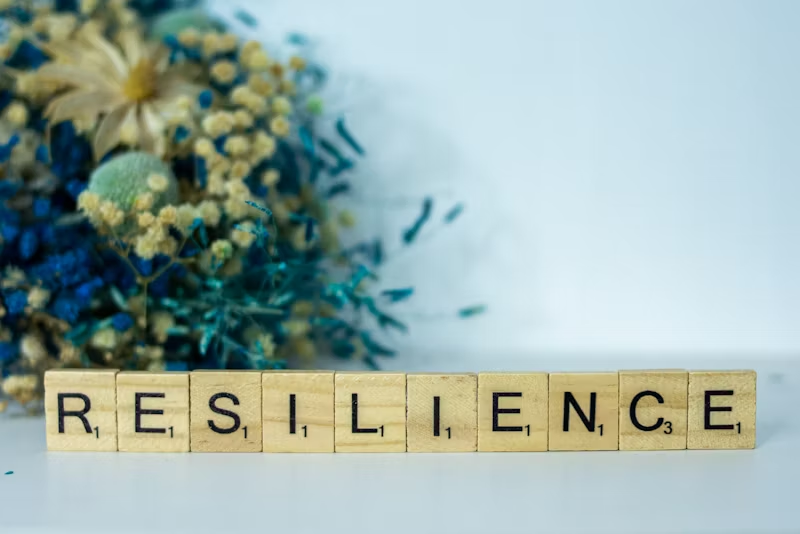
Image of the word resilience in wooden blocks.

When federal policies shift like tectonic plates, the tremors are felt most acutely in city halls, county offices, and state agencies where public servants face the daily reality of implementing change while serving their communities. As an executive coach working with public sector leaders, I’ve witnessed firsthand how these policy upheavals create both profound challenges and unexpected opportunities for advancing gender equity at the local level. 

The Human Side of Policy Implementation
The abstract language of federal mandates becomes intensely personal when a county health director must decide how to maintain reproductive health services despite funding cuts, or when a school superintendent navigates new regulations affecting transgender students while protecting their wellbeing. These leaders aren’t just implementing policy—they’re making moral choices that ripple through families and communities. 

In my coaching practice, I’ve observed that the most effective local leaders during times of federal uncertainty share several key characteristics. They develop what I call “adaptive equity intelligence”—the ability to read the political landscape while remaining anchored in their values. They build coalitions across traditional boundaries, ending unlikely allies in pursuit of shared goals. Most importantly, they cultivate resilience not just for themselves, but for their teams and the communities they serve.

Strategies for Equity-Centered Leadership
Local government leaders are increasingly employing innovative approaches to maintain gender equity progress despite federal headwinds. Some are leveraging existing statutory authority in creative ways—like using general welfare provisions to fund childcare programs when federal dollars disappear. Others are building what I term “equity insurance” by diversifying funding sources and creating redundant systems of support.

The most successful leaders I work with understand that gender equity isn’t a separate initiative to be managed alongside “real” governance—it’s a lens through which decisions must be evaluated. This aligns with research showing that public policies may have a major impact on gender equality and attaining equal access to opportunities, resources, and rights for women, men, and other gender identities. They ask different questions: How does this budget cut affect single mothers differently than married couples? What barriers might transgender residents face in accessing this service? How can we ensure that immigrant women feel safe engaging with our programs?

The Coaching Imperative
Perhaps most critically, these leaders recognize that sustaining gender equity work requires intentional leadership development. They invest in coaching and professional development for themselves and their teams, understanding that the emotional labor of this work can lead to burnout without proper support systems. 

The leaders who thrive in this environment have learned to hold complexity—to acknowledge the genuine constraints, they face while refusing to accept inequity as inevitable. They view federal policy shifts not as insurmountable obstacles but as problems to be solved creatively, often in partnership with community organizations, nonprofits, and advocacy groups.

Looking Forward 
As we navigate continued federal uncertainty, local governments need leaders who can operate with both pragmatic realism and unwavering commitment to equity. This requires new models of leadership development that prepare public servants not just to manage programs, but to advance justice in environments that may not always support that work. Research on local governance demonstrates that “the implementation of gender equality commitments at the local level requires a concerted effort by national and local governments, civil society, development partners and donor agencies.”  

The question isn’t whether federal policy will continue to shift—it will. The question is whether we’re developing the kind of adaptive, equity-centered leaders who can turn those shifts into opportunities for progress rather than excuses for retreat. In my experience, when we invest in developing these leaders, communities don’t just survive policy upheavals—they emerge stronger and more equitable than before. 

Dora Mendez, MPA (she/ella) is a Fractional Chief Human Resources Officer specializing in leadership development coaching. Learn more at www.coachdoramendez.com 

References: 

UN Women. “Local Governance.” Financing For Gender Equality. 
https://gender-inancing.unwomen.org/en/areas-of-work/local-governance

SpringerLink. “Public Policies on Gender Equality.” In Public Policy and Gender Equality, 2022. https://link.springer.com/chapter/10.1007/978-3-031-14360-1_12

◂Return to blog homepage


Dora Mendez, MPA
About the author:

Dora Mendez, MPA (she/her/ella), is the Founder and CEO of Coach Dora LLC and a distinguished C-Suite Executive with over 12 years of experience in human resources. She is a passionate advocate for diversity, equity, and inclusion (DEI),a beacon of bold authenticity using her writing and public speaking to ignite meaningful conversations. Through her coaching and consulting services, she strives to create a world where individuals feel empowered to lead with both courage and compassion. 

Her leadership experience includes serving as a Fractional Chief Human Resources Oficer (CHRO), Vice President of HR & Chief DEI Oficer, and Director of HR and People & Culture roles in mission-driven nonproit organizations. Prior to these roles, she worked in public service, investigating hundreds of discrimination complaints. 

Mendez earned her Master’s in Public Administration (MPA) from the City University of New York-John Jay College of Criminal Justice. Since graduating, she has dedicated over 14 years to teaching at John Jay as an Adjunct Professor. She is also a contributing author to Latinas Rising Up in HR Vol. 3 – Executive Edition (2024) and co-author of Extraordinary Latinas Vol. IV (2025). 

CONTACT INFORMATION 

www.coachdoramendez.com 

Speaker Reel 

Media/Press Kit

Categories
Blog

Introduction to the Fall 2025 IGEPS Blog Series: Gender Equity in Uncertain Times

by Ying Liu:

Image of a group of red question marks.

This blog series aims to spark conversation and reflection on the political, administrative, and normative dimensions of subnational responses to federal shifts by exploring the following questions: (1) How are recent federal policy advances and reversals, such as those related to reproductive rights, immigrant protections, and gender-affirming care, reshaping gender equity at the local level? (2) How do state and local governments interpret, adapt, and implement evolving federal policies in ways that mitigate the unintended consequences for women and other marginalized populations (e.g., through state abortion shield laws, protections for gender-affirming care, or limits on immigrant enforcement)? (3) In what ways do local actors, including governments, nonprofits, and advocacy groups, mediate the impact of federal policy changes on women and other vulnerable populations? (4) What strategies do frontline public servants use to navigate politically charged federal mandates while advancing gender equity in service delivery?

Our blog contributors, including both academics and practitioners, explore these questions across a wide range of policy areas to reveal how federal shifts can either exacerbate or alleviate longstanding gender disparities at the state and local level. Topics include refugee and immigrant protections, local government budgeting and finance, environmental protection and sustainability, women’s leadership, and public sector employment. These issues disproportionately affect women, girls, and LGBTQ+ individuals, particularly those at the intersections of race, class, and immigration status.

As federal policymaking becomes increasingly volatile, shaped by rapidly issued executive actions, shifting budget priorities, and evolving administrative regulations, its downstream effects are especially consequential for gender equity at the subnational level. State and local governments are not only primary implementers of these policies but also the arenas where gendered consequences are most visible, experienced, and contested. The growing reliance on decentralized governance underscores the heightened significance of public administration at the state and municipal levels in safeguarding gender equity. This moment demands renewed scholarly attention to the adaptive capacities, institutional arrangements, and gender equity implications of local governance, especially as state and local actors increasingly serve as the frontline in mediating federal change and safeguarding the rights and well-being of women, LGBTQ+ individuals, and other marginalized populations in their communities.

A key example of this policy shift is freezing Title X Family Planning Program funds, which has resulted in seven states losing all Title X funding, and in turn, significantly reducing access to reproductive health care for low-income women. The Department of Justice has also canceled grants that previously supported local governments and community organizations in providing gender-appropriate housing for incarcerated transgender individuals and maintaining online communities for survivors of sexual violence. Federal efforts targeting the transgender community have further intensified these challenges by producing ripple effects in state-level legislation (Blessett and Meyer 2025). As Blessett and Meyer (2025) note, “Twelve states have passed bills related to bans on bathrooms; nine states enacted sports bans; ten states deny gender-affirming care; and two states promote trans segregation,” with additional “anti-LGBTQIA+ bills working their way through state legislatures.”

Executive Orders (e.g., EO 14173, EO 14168, EO 14151), which target Diversity, Equity, and Inclusion (DEI) initiatives and eliminate affirmative action programs for women and minorities, have further undermined institutional commitments to social equity and democratic values (Riccucci 2025; Gooden 2025). Efforts to roll back diversity, equity, and inclusion initiatives are gaining momentum in Republican-led states. Moreover, it has placed local governments and nonprofits under unprecedented pressure and scrutiny. Nonprofit organizations serving women, such as domestic violence nonprofits and women’s advocacy groups, are facing significant challenges, not only due to budget cuts but also because of the increased need to carefully manage their public communications. Many now tread cautiously to avoid language that might conflict with executive actions aimed at dismantling DEI programs and targeting what has been labeled “gender ideology extremism.” Similarly, universities and school districts are seeing their DEI-related programs and budgets come under increased scrutiny, and they are responding in different ways. Many local governments are now required to review their contracting and procurement practices to ensure compliance with new mandates.To begin this series, Coaching Through Crisis: Building Resilient Leadership for Gender Equity in Local Government by Dora Mendez explores how federal policy shifts reverberate through city halls, county offices, and state agencies. We welcome submissions throughout the Fall 2025 semester. If you are interested in contributing, please email us at genderequity@igeps.org. We encourage a wide range of perspectives, including contributions from public servants, scholars, advocates, and nonprofit leaders. The goal is to foster dialogue and share innovative approaches to advancing inclusion and equity in public service.

◂Return to blog homepage


About the author:

Ying Liu is a PhD candidate at the School of Public Affairs and Administration at Rutgers University–Newark. Her research interests include public and nonprofit management, social equity, local governance, digital government, and accountability.  Committed to mainstreaming gender issues in public and nonprofit administration, she is currently exploring topics such as women’s representation, gender-responsive budgeting, gender and technology, and women’s nonprofit organizations. Her work has been published in journals including Review of Public Personnel Administration, Policy Studies Journal, and The China Quarterly. She earned her Master of Public Administration from Wuhan University and Bachelor of Public Management from Huazhong University of Science and Technology.