

by Ying Liu:
Image of a group of red question marks.
This blog series aims to spark conversation and reflection on the political, administrative, and normative dimensions of subnational responses to federal shifts by exploring the following questions: (1) How are recent federal policy advances and reversals, such as those related to reproductive rights, immigrant protections, and gender-affirming care, reshaping gender equity at the local level? (2) How do state and local governments interpret, adapt, and implement evolving federal policies in ways that mitigate the unintended consequences for women and other marginalized populations (e.g., through state abortion shield laws, protections for gender-affirming care, or limits on immigrant enforcement)? (3) In what ways do local actors, including governments, nonprofits, and advocacy groups, mediate the impact of federal policy changes on women and other vulnerable populations? (4) What strategies do frontline public servants use to navigate politically charged federal mandates while advancing gender equity in service delivery?
Our blog contributors, including both academics and practitioners, explore these questions across a wide range of policy areas to reveal how federal shifts can either exacerbate or alleviate longstanding gender disparities at the state and local level. Topics include refugee and immigrant protections, local government budgeting and finance, environmental protection and sustainability, women’s leadership, and public sector employment. These issues disproportionately affect women, girls, and LGBTQ+ individuals, particularly those at the intersections of race, class, and immigration status.
As federal policymaking becomes increasingly volatile, shaped by rapidly issued executive actions, shifting budget priorities, and evolving administrative regulations, its downstream effects are especially consequential for gender equity at the subnational level. State and local governments are not only primary implementers of these policies but also the arenas where gendered consequences are most visible, experienced, and contested. The growing reliance on decentralized governance underscores the heightened significance of public administration at the state and municipal levels in safeguarding gender equity. This moment demands renewed scholarly attention to the adaptive capacities, institutional arrangements, and gender equity implications of local governance, especially as state and local actors increasingly serve as the frontline in mediating federal change and safeguarding the rights and well-being of women, LGBTQ+ individuals, and other marginalized populations in their communities.
A key example of this policy shift is freezing Title X Family Planning Program funds, which has resulted in seven states losing all Title X funding, and in turn, significantly reducing access to reproductive health care for low-income women. The Department of Justice has also canceled grants that previously supported local governments and community organizations in providing gender-appropriate housing for incarcerated transgender individuals and maintaining online communities for survivors of sexual violence. Federal efforts targeting the transgender community have further intensified these challenges by producing ripple effects in state-level legislation (Blessett and Meyer 2025). As Blessett and Meyer (2025) note, “Twelve states have passed bills related to bans on bathrooms; nine states enacted sports bans; ten states deny gender-affirming care; and two states promote trans segregation,” with additional “anti-LGBTQIA+ bills working their way through state legislatures.”
Executive Orders (e.g., EO 14173, EO 14168, EO 14151), which target Diversity, Equity, and Inclusion (DEI) initiatives and eliminate affirmative action programs for women and minorities, have further undermined institutional commitments to social equity and democratic values (Riccucci 2025; Gooden 2025). Efforts to roll back diversity, equity, and inclusion initiatives are gaining momentum in Republican-led states. Moreover, it has placed local governments and nonprofits under unprecedented pressure and scrutiny. Nonprofit organizations serving women, such as domestic violence nonprofits and women’s advocacy groups, are facing significant challenges, not only due to budget cuts but also because of the increased need to carefully manage their public communications. Many now tread cautiously to avoid language that might conflict with executive actions aimed at dismantling DEI programs and targeting what has been labeled “gender ideology extremism.” Similarly, universities and school districts are seeing their DEI-related programs and budgets come under increased scrutiny, and they are responding in different ways. Many local governments are now required to review their contracting and procurement practices to ensure compliance with new mandates.To begin this series, Coaching Through Crisis: Building Resilient Leadership for Gender Equity in Local Government by Dora Mendez explores how federal policy shifts reverberate through city halls, county offices, and state agencies. We welcome submissions throughout the Fall 2025 semester. If you are interested in contributing, please email us at genderequity@igeps.org. We encourage a wide range of perspectives, including contributions from public servants, scholars, advocates, and nonprofit leaders. The goal is to foster dialogue and share innovative approaches to advancing inclusion and equity in public service.
About the author:
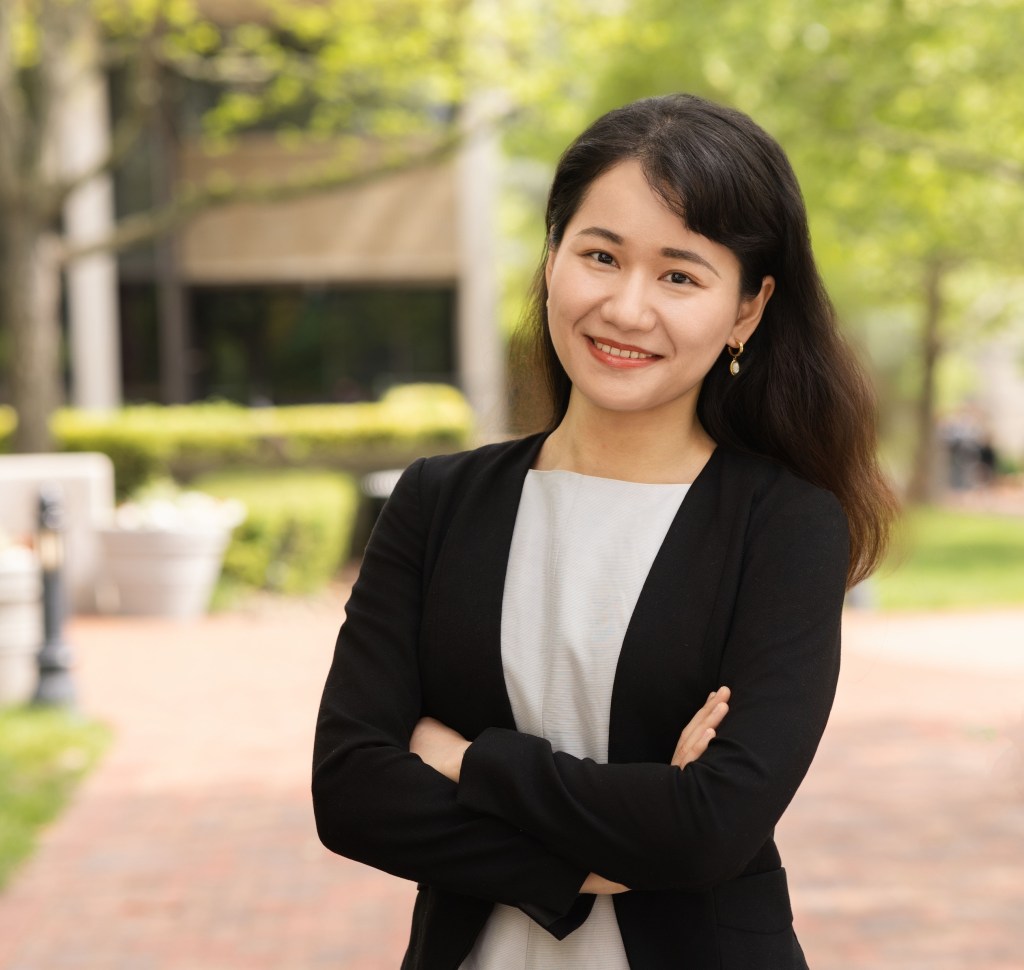
Ying Liu is a PhD candidate at the School of Public Affairs and Administration at Rutgers University–Newark. Her research interests include public and nonprofit management, social equity, local governance, digital government, and accountability. Committed to mainstreaming gender issues in public and nonprofit administration, she is currently exploring topics such as women’s representation, gender-responsive budgeting, gender and technology, and women’s nonprofit organizations. Her work has been published in journals including Review of Public Personnel Administration, Policy Studies Journal, and The China Quarterly. She earned her Master of Public Administration from Wuhan University and Bachelor of Public Management from Huazhong University of Science and Technology.