

by Schnequa N. Diggs and Nuri Heckler:
Image of Philadelphia’s Magic Garden mosaic.
Mosaics are interlocking unique shapes at different scales in repeated patterns, representing movement, depth, and dimension. Their patterns tell stories through sequential scenes or symbolic meaning. Understanding these patterns enhances an appreciation of mosaic art and can inspire new designs.
Imagine a mosaic where each colorful tile represents a unique person with their own shape, color, gender, race, age, disability, and socioeconomic background. On their own, they are a wonder. Together, they are multitudes.
Relying on this metaphor, we authored a chapter, Patterns in the Mosaic: Towards a Taxonomy of Common Types of Intersectionality responding to Blessett’s (2020) call for public administration to develop an intersectional framework for understanding governance. In the chapter, we define intersectionality as the complex and unique mix of identities within people. We then attempt to identify the patterns in the mosaic and how these identities combine to either strengthen or resist discrimination.
One pattern we identify is differentiation, where people refer to their identity to provide space for advocacy. One possible example of differentiation is Black Women for Kamala supporting the first Black and South Asian woman party nominee for President.
Another common pattern is positional alignment where people with identities that are privileged by the power structure align with identities that are not. An example of positional alignment is White Dudes for Harris, where White men deliberately highlighted their race and gender to raise money in alignment with Black Women for Kamala.
In some cases, positional alignment can be used as moral cover for acts of inequality. Some White Dudes may use their support of Vice President Harris to protect their own financial class interests, their interests in a conservative international political regime, or even to provide cover for their own racism and sexism. Our chapter suggests that identifying and labeling patterns such as these is the first step toward understanding the mosaic of equality, justice, and democracy in governance and meaningfully advance social justice.
The mosaic analogy draws parallels between the visual complexity and the multifaceted nature of intersectionality in governance. It emphasizes how the combination of different elements (or identities) creates a richer, more nuanced understanding. In public administration, public servants are like these diverse tiles, each bringing their distinct experiences and perspectives.
Our intersectionality framework focuses on how these tiles overlap and intersect to form the complexities of multisectoral modern governance. Just as a mosaic’s beauty emerges from the interplay of various shapes and colors, the strength of public institutions lies in the complex interactions of diverse identities. Understanding intersectionality allows leaders to appreciate the multifaceted nature of governance leading to more inclusive policies and practices that reflect the rich tapestry of public service.
Intersectionality is one of the most important, complex, and misunderstood concepts in social justice. Through an intersectional framework, public sector organizations can identify (1) identify both productive and hostile patterns of intersectionality; (2) prevent discrimination by exposing underlying harmful assumptions: (3) enable complex and actionable conversations about differences, and (4) grasp identifiable actions to further a just, equal, and democratic society.
To truly run a constitution in an intersectional society requires focusing on the ways that privilege and marginalization intersect in public administration.
Photo by Jennifer Boyer of Philadelphia’s Magic Garden mosaic. https://www.flickr.com/photos/jenniferboyer/28435750302/

Read More in Making Sense of Identity and Equity in the Public Sector (Routledge)
About the author:
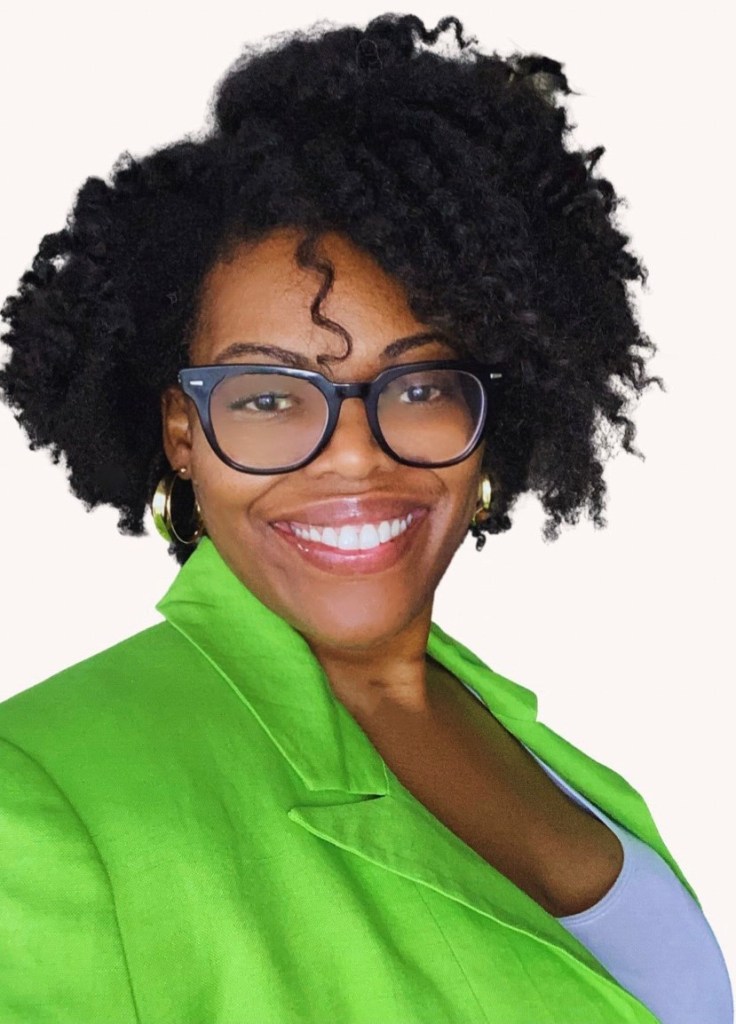
Schnequa N. Diggs, Ph.D. (she/her) is an Assistant Professor at North Carolina Central University. Her research examines social equity and the impact administrative actions, that perpetuate inequities, discrimination, and oppression, have on marginalized and minoritized communities. Her research can be found in the Journal of Public Administration Education, Administrative Theory & Praxis, Journal on Equity in Public Administration, and Public Integrity.

About the author:
Nuri Heckler, J.D., Ph.D. (he/him) is an Associate Professor at the University of Nebraska at Omaha. His research focuses on Whiteness and Masculinity in public organizations including nonprofits and municipalities. Using experimental, qualitative, historical, and theoretical research methods, he examines the mechanisms that reinforce inequities and inefficiencies in public organizations. As a Maryland barred attorney, his research also examines the role law plays in the work of public administrators. His research can be found in Administrative Theory & Praxis, Journal of Public Administration Research & Theory, Administration & Society, Journal of Public Affairs Education, Urban Affairs Review, and Public Integrity among others. He is an avid commuter cyclist who spends his free time with his two children and baking award-winning cookies.