

by Elsa Sophia Morote:
Image of Elsa Sophia Morote’s three steps to create an inclusive environment in public administration.
Throughout my career, I have been deeply committed to advocating for the inclusion of underrepresented communities in public administration leadership. A persistent question guided my efforts: Why, despite their growing numbers, are Hispanic leaders still significantly underrepresented in the upper areas of public sector leadership? My Goal was to develop a framework to create a path to create an inclusive public administration environment.
My study focused on the lived experiences of ten Hispanic public administrators in New York, aiming to understand the obstacles hindering their advancement to higher leadership positions as well as what makes them persist. The findings were not entirely unexpected; they were eye-opening. These leaders navigate a labyrinth of challenges, often without formal institutional support, while working to demonstrate their value in systems that frequently overlook their potential and, at the same time, develop deep care for their constituents. They have a strong sense of service and feel responsible for the community they serve.
One of the themes that emerged from the interviews: the subtle exclusion from critical decision-making processes. Although these Hispanic leaders held key positions, many felt marginalized from essential conversations. One interviewee stated, “The non-inclusion is so subtle that it would be difficult to prove or explain.” This reflects the subtle nature of systemic barriers, making them all the more difficult to dismantle, even for those who have already ascended into leadership roles.
This exclusion brought me back to a fundamental question of power dynamics. A “power-over” model has long dominated public administration, where authority is concentrated at the top. However, my research revealed that Hispanic leaders who have advanced are those who have cultivated a strong sense of self-efficacy and identity—what can be termed as “power-within.” These leaders are reshaping leadership into a more collaborative and inclusive model called “power-with.” They are ready to take on greater responsibilities but require institutional support and meaningful inclusion in decision-making processes. This sense of “power-within” fosters resilience and reinforces a collective agency—what Love and Stout (2022) describe as power grounded in love, connection, and joy. This is very well connected with the mission of these public administration leaders. They connect with the community.
Using Love and Scout research as a framework, I propose a three-step framework designed to bolster the advancement of Hispanic leaders in public administration:
The first step centers on self-empowerment, or “power within.” Hispanic leaders must be provided with opportunities for mentorship, networking, and professional development to cultivate their confidence and expand their skills. One interviewee eloquently captured this need: “Politics and government are different. You can do a lot with government, which is what got me into it—I wanted to support my community.” Fostering this internal empowerment is critical for ensuring continued progress.
The second step focuses on community integration, or “power-with.” Hispanic leaders must collaborate, advocating for their professional growth and the betterment of their communities. Many are already deeply engaged in mentoring emerging leaders and championing resources for underserved populations. Their dedication to uplifting others is commendable, but they should not bear this responsibility alone. Public institutions must establish formal structures to support and sustain these efforts.
The final step involves harnessing collective influence to enact policy change, or “power-to.” Representation alone is insufficient; Hispanic leaders must be positioned to shape policies and hold organizations accountable for advancing diversity, equity, and inclusion. One interviewee remarked, “It took 340 years to have an elected official for a community with a large Latino population.” Achieving meaningful progress must be a manageable endeavor, and we must work toward a future where Hispanic leadership in policymaking becomes the norm, not the exception.
This is, in summary, the idea that has been present throughout my work as a researcher. Hispanic leaders can be a force for good, but they require rather a supportive infrastructure for their rise. I assert that there is a way to achieve more accountable, just, and inclusive policies in public administration through self-empowerment, building democratic networks, and encouraging policy engagement. It is my wish that the ideas presented herein will be helpful in the discussions at hand and how to bring about relevant and constructive change.

Figure 1. Three steps to create an inclusive environment in public administration
Read More in Making Sense of Identity and Equity in the Public Sector (Routledge)
References
Bandura, A. (1994). “Self-efficacy.” In Encyclopedia of Human Behavior. 4, edited by V. S. Ramachandran, pp. 71–81. New York: Academic Press.
Einstein, K. L., & Glick, D. M. (2017). Does Race Affect Access to Government Services? An Experiment Exploring Street-Level Bureaucrats and Access to Public Housing. American Journal of Political Science, 61(1), 100–116. https://doi.org/10.1111/ajps.12252
García, I., Jackson, A., Greenlee, A. J., Yerena, A., Chrisinger, B., & Lee, C. A. (2021). Feeling Like an “Odd Duck”: The Experiences of African American/Black and Hispanic/Latin/o/a/x Planning Practitioners. Journal of the American Planning Association, 87(3), 326–340. https://doi.org/10.1080/01944363.2020.1858936
Love, J. M. & Stout, M. (2023). “Exposing and Dismantling White Culture in Public Administrations.” Administrative Theory & Praxis DOI: 10.1080/10841806.2023.2234245Love, J. M., & Stout, M. (2022). Transforming power dynamics through prefigurative public administration. Administrative Theory & Praxis, 44(3), 179–185. https://doi.org/10.1080/10841806.2022.2058289
About the author:
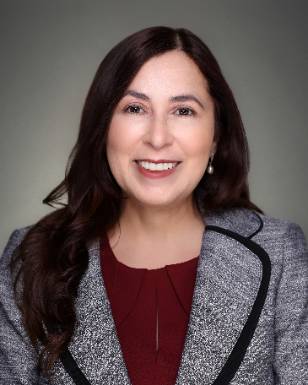
Elsa Sophia Morote, Ed.D., Ph.D., is a distinguished Professor of Public Policy at John Jay College of Criminal Justice. With two doctoral degrees and a senior postdoctoral stint at MIT, Dr. Morote brings over 25 years of experience in higher education, having held several senior leadership roles. Her career includes founding the International & Diversity Institute at Dowling College, serving as Dean of Workforce Development at Farmingdale State College, and as Dean of Graduate Studies at John Jay College. In these positions, she enhanced student enrollment and retention, forged partnerships with social agencies, strengthened alumni relations, secured nearly $3.7 million in funding, and boosted diversity among students and faculty. Dr. Morote has published over 50 peer-reviewed articles, books, and book chapters, and has mentored 200 dissertations. She has received more than 20 honors, including awards for best mentor and best research papers, and recognition as a community advocate. Additionally, she founded a nonprofit organization focused on supporting the career advancement of leaders and scholars, emphasizing Inquiry, Innovation, and Impact to improve societal well-being.