
by Tanachia Ashikali:
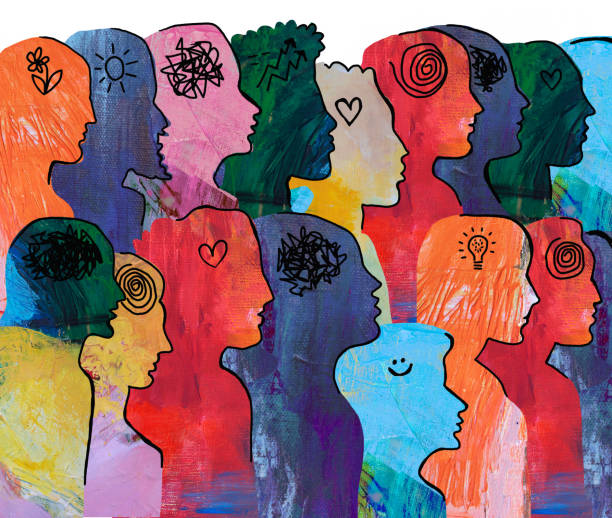
Image of diverse minds to promote diverse perspectives to promote diverse decision making.
Despite the recognition of inclusiveness as a key priority, public organizations still struggle with issues of exclusion and inequity. A diverse and inclusive work environment promotes social equity by ensuring equal opportunities and integrating diverse perspectives into decision-making. However, achieving such an environment requires leadership. Leaders play a critical role in managing processes that foster inclusiveness, shaping organizational culture, and promoting values that encourage fairness and equity.
In Chapter 13, “Leading towards Inclusiveness in Public Organizations“, from the edited book Making Sense of Identity and Equity in Public Sector Workplaces by Nicole Elias, Maria D’Agostino, and Maja Husar Holmes, I explore values underlying diversity, equity, and inclusion (DEI), the nature of inclusiveness, and the concept of inclusive leadership. Below is a summary of the key insights related to inclusive leadership in public organizations.
Inclusive Leadership
Inclusive leadership refers to leadership behaviors that encourage the full participation of all employees in formal and informal work processes. It involves facilitating the exchange and integration of diverse perspectives, while also helping employees balance individuality with a sense of belonging. This leadership style is grounded in both an inclusivity and an integration and learning perspective.
Two core components of inclusive leadership can be identified. The first is cognitive, involving behaviors that encourage exchanging, discussing, and integrating differences within a diverse group. This aspect draws on the integration and learning perspective, emphasizing the value of diverse viewpoints. The second component is effective, focusing on supporting an individual’s sense of belonging and authenticity. Leaders help prevent exclusion that can arise from group differences, thus mitigating the tendency to distinguish between “in-group” and “out-group” members.
Antecedents and Outcomes of Inclusive Leadership
Research shows that inclusive leadership has numerous positive outcomes, such as improving inclusion, creativity, innovation, engagement, and employee well-being. However, leaders often overestimate their abilities in socially desirable areas like inclusive leadership, making it important to understand how employees perceive their leaders and experience inclusion. The most accurate assessments come from 360-degree feedback and peer evaluations.
While inclusive leadership can be cultivated, individuals and organizations exhibit it to varying degrees. Limited research exists on inclusive leadership within the public sector, but emerging studies suggest that both personal and organizational factors influence it. Key personal traits include humility, empathy, motivation, and lived experiences. Leaders who value learning from others and prioritize diversity are more likely to adopt inclusive leadership behaviors. Those who have faced exclusion themselves may also be more attuned to inclusivity.
Organizational factors play an equally significant role. Flexible cultures that promote participation, teamwork, and development foster inclusive leadership. Conversely, rigid control structures and large spans of control inhibit it. The broader political and administrative context also influences the development of inclusive leadership. In the Netherlands, for instance, DEI initiatives gain prominence based on political and societal trends. When DEI becomes a political priority, it often leads to its integration into work processes, policies, and leadership development, promoting inclusivity. However, political polarization and centralized decision-making can hinder these efforts by limiting the inclusion of diverse perspectives.
Developing Inclusive Leadership
The development of inclusive leadership is challenging, especially in hierarchical organizations with cultures of uniformity and control, such as the police. These organizations tend to favor top-down, directive leadership styles while fostering inclusiveness requires a participatory, bottom-up approach. When values such as uniformity and neutrality dominate, achieving inclusiveness becomes a balancing act that requires careful navigation of internal and external tensions. This underscores the need for a deeper exploration of how bureaucratic values like neutrality interact with the principles of diversity and inclusion.
To nurture inclusive leadership at all organizational levels, it must be integrated into leadership development programs. Inclusiveness requires ongoing attention and investment from multiple stakeholders, including HR, top management, line managers, and employees. Tailored leadership development pathways should address the diverse learning needs of individuals and teams. In addition, organizations could explore accountability strategies to ensure lasting behavioral change across all levels.
In summary, inclusive leadership is essential for fostering equitable and diverse work environments. It requires both cognitive and affective leadership behaviors that support the exchange and learning of diverse perspectives and ensure a sense of belonging for all employees. Personal traits, organizational culture, and political context play crucial roles in shaping inclusive leadership, while targeted development programs can help cultivate it.

About the author:
Dr. Tanachia Ashikali is an assistant professor at the institute of Public Administration, Leiden University, the Netherlands. Her research focuses on leadership, diversity management, inclusiveness, and teamwork in public organizations. She teaches courses on leadership and public management and supervises master theses on these and related topics. As a coordinating member of the Leiden Leadership Centre, she actively engages with practitioners through invited talks, workshops, and research collaborations on leadership and inclusiveness in various (semi-) public institutions.